
There is a moment, a few weeks after getting implant dentures, when most people realise they have stopped thinking about their teeth while they eat. That is a wonderful feeling. The one habit we ask you not to stop thinking about is the cleaning. A few minutes a day protects an investment you will rely on for years.
This guide is the routine we walk patients through at our Cookstown office. It is written to be practical: what to use, what order to do things in and what to watch for. Your own instructions may differ slightly depending on the design of your denture, so treat this as a framework and follow any specific advice from your dentist or hygienist.
First, know which type you have
Implant dentures come in two broad styles, and the cleaning routine depends on which one is in your mouth.
Removable implant dentures (often called snap-in or overdentures) clip onto two or more implants using small attachments. You take them out to clean them and usually at night. Underneath, you will see the tops of the implants or a metal bar sitting just above the gum.
Fixed implant dentures are screwed or cemented onto the implants and are only removed by the dental team. You clean them in place, much like a long bridge. Full-arch options such as fixed dentures fall into this group.
If you are not sure which you have, ask at your next visit. It makes a real difference to which tools are most useful.
Why cleaning still matters when implants cannot decay
Titanium implants do not get cavities, and denture teeth do not decay either. So it is tempting to think the hard work is done. The concern is the soft tissue. Plaque that sits around an implant can inflame the gums, a condition called peri-implant mucositis. Left alone, that inflammation can progress to peri-implantitis, which affects the bone holding the implant in place.
The early stage is usually reversible with better cleaning and professional care. The later stage is harder to treat. That is why a steady daily routine, rather than an occasional deep scrub, is what keeps implants healthy.
Your toolkit
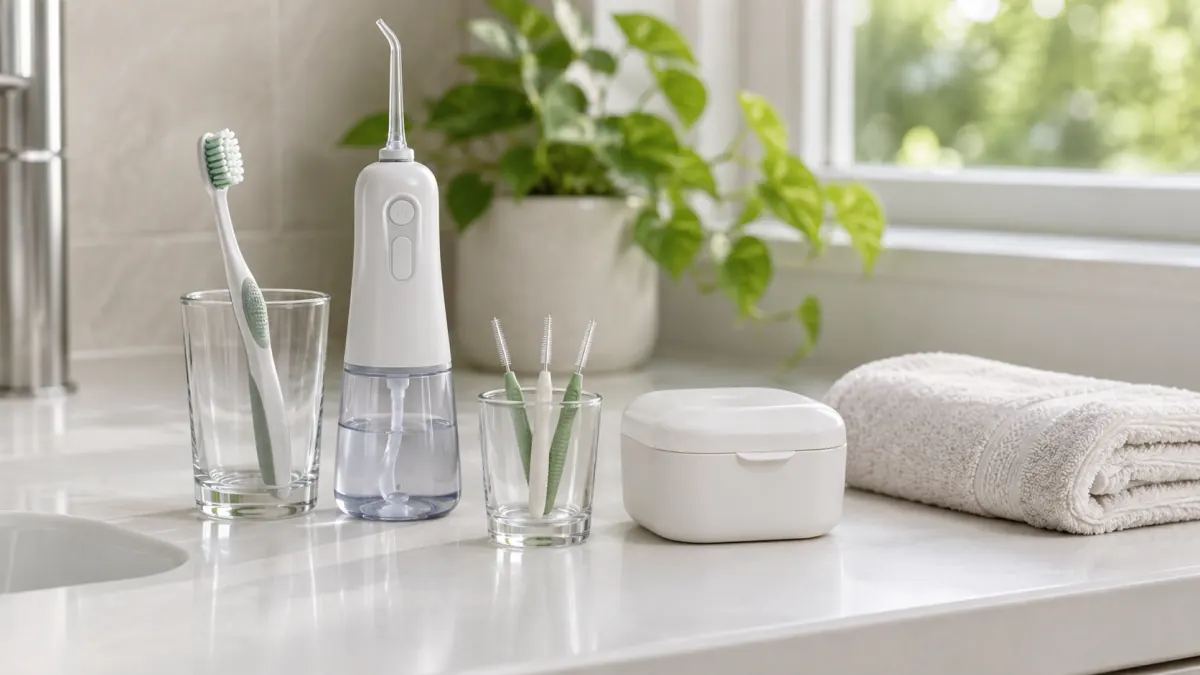
You do not need a bathroom full of gadgets. Most people get excellent results with a short list:
- A soft-bristled toothbrush, manual or electric, for the gums and implant posts.
- A denture brush with firmer bristles, for the removable denture itself (not for your gums).
- Interdental brushes in the sizes your hygienist recommends, for cleaning around implants and under bars.
- A water flosser, especially useful for fixed dentures where floss is hard to thread.
- Implant floss or superfloss, which has a stiff end for threading under bridges and bars.
- Non-abrasive cleanser for the denture: mild unscented soap or a product your dentist recommends.
- A denture case for overnight storage.
One thing to leave out: regular whitening toothpaste on denture teeth. Many toothpastes contain abrasives that can scratch acrylic over time, making the surface duller and easier for stain and bacteria to cling to.
The morning routine
If your denture is removable
- Rinse the denture under lukewarm water when you take it out of its case. Hot water can warp acrylic.
- Brush your gums and implant attachments gently with the soft toothbrush. Pay attention to the area where each attachment meets the gum.
- Rinse your mouth with water.
- Snap the denture in by pressing evenly with your fingers, not by biting it into place. Biting can strain the attachments.
If your denture is fixed
- Brush the outside and biting surfaces of the teeth, as you would natural teeth, for about two minutes.
- Angle the brush toward the gumline so the bristles reach where the bridge meets the gum.
- Run the water flosser along the underside of the bridge, tracing around each implant. Lean over the sink with your mouth slightly closed to avoid splashing.
Morning cleaning can be quicker than the evening one. The point is to clear overnight plaque and start the day fresh.
The evening routine
The evening clean is the thorough one. Plaque that sits overnight has hours to mature, so this is where you take your time.
Removable dentures
- Take the denture out over a folded towel or a sink partly filled with water, in case you drop it.
- Brush every surface of the denture with the denture brush and your chosen cleanser. Pay special attention to the attachment housings on the underside, which can collect debris.
- Clean the implants or bar in your mouth with the soft brush and interdental brushes. If you have a bar, thread floss or an interdental brush underneath it.
- Soak the denture overnight in water or a soaking solution your dentist approves. Letting acrylic dry out can cause it to change shape.
- Give your gums a rest. Unless your dentist has told you otherwise, sleeping without a removable denture lets the tissues recover.
Fixed dentures
- Brush thoroughly for two minutes, covering the cheek side, tongue side and biting surfaces.
- Use the water flosser slowly along the underside of the bridge. Many people find a medium setting is enough once they are used to it.
- Follow up with superfloss or interdental brushes around each implant if you have been shown how.
- Check for trapped food with your tongue. If something feels stuck, run the water flosser over that area again.
Weekly and monthly habits
A few tasks do not need doing every day but are worth putting on the calendar.
| How often | Task | Applies to |
|---|---|---|
| Weekly | Soak the denture in an approved cleaning solution | Removable |
| Weekly | Look in a mirror at your gums around each implant | Both |
| Monthly | Replace interdental brush heads if bristles are bent | Both |
| Every 3 months | Replace your toothbrush or brush head | Both |
| As advised | Professional cleaning and implant check | Both |
| As advised | Replace attachment inserts (they wear over time) | Removable |
The attachment inserts in removable implant dentures are small nylon parts that provide the “snap.” They naturally loosen with use, and replacing them is a routine, quick appointment. If your denture starts to feel less secure, this is often the reason.
Signs to call the clinic
Most issues are easy to deal with when they are caught early. Get in touch if you notice:
- Gums around an implant that bleed regularly, look red or swollen, or feel tender.
- A bad taste or odour that does not go away with cleaning.
- A removable denture that no longer clicks firmly into place.
- A fixed denture that feels loose, makes a clicking noise or rocks when you bite.
- A chipped or cracked tooth on the denture.
- Any sore spot that lasts more than a few days.
You can reach us at (705) 291-2222. A short visit now can save a much bigger repair later.
Professional maintenance
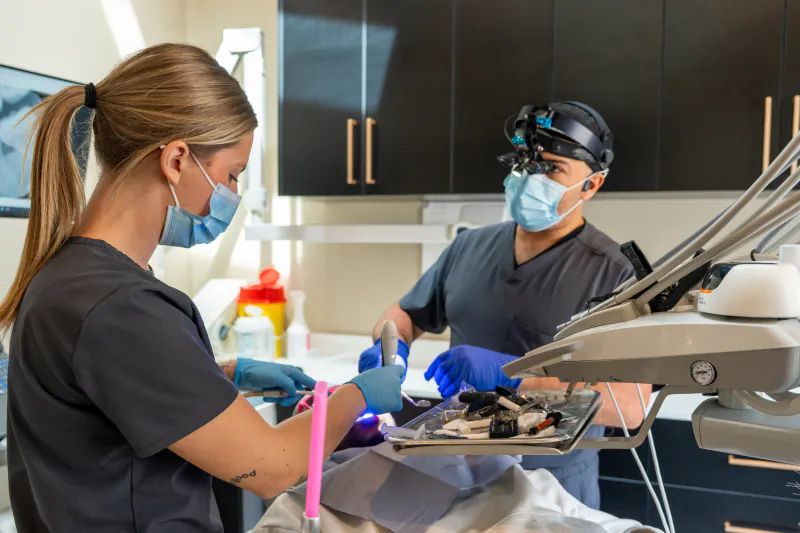
Home care does most of the work, but it cannot do everything. Professional visits let the team remove hardened deposits you cannot reach, check how the implants and gums are doing, and examine the denture for wear.
For fixed dentures, the dentist may occasionally remove the bridge to clean underneath it thoroughly and check the implants directly. For removable dentures, the visit often includes checking the fit and the attachments. How often you need these appointments depends on your mouth and your health, and many people start with visits every three to six months.
If you are new to our practice, our new patients information page explains what to bring to your first appointment.
Making it easier when hands are not as steady
Dexterity can be a real challenge, particularly for people with arthritis or after a stroke. A few practical tweaks help:
- Electric toothbrushes have thicker handles and do much of the work.
- Foam grips or a bicycle handlebar grip can make a manual brush easier to hold.
- A water flosser with a handle switch avoids fiddly floss.
- Sit down while cleaning a removable denture, with a towel in your lap.
- Ask a family member or caregiver to watch a cleaning demonstration at your next appointment so they can help at home.
If cleaning becomes genuinely hard, tell us. Sometimes a small design change can make maintenance much simpler.
Common questions from our patients
Can I use regular toothpaste on my implant denture?
On your natural gums and implant posts, a low-abrasion toothpaste is fine. On the acrylic denture teeth, it is better to use mild soap or a dedicated denture cleanser, since many toothpastes are abrasive enough to scratch the surface over time.
Should I sleep with my snap-in denture?
Most people are advised to remove it at night so the gums can rest and the attachments get a break. There are exceptions, so follow the instructions you were given.
Is a water flosser enough on its own?
For many people with fixed dentures, a water flosser is the most effective tool for cleaning underneath. It works best alongside brushing and, where advised, interdental brushes, rather than replacing them.
How long will my implant denture last?
The implants themselves can last many years with good care. The denture teeth and attachments wear and may need repair or replacement over time. Regular checkups help you plan for that rather than be surprised by it.
We are here to help you keep it simple
A routine you can actually stick to is better than a perfect one you abandon after a month. If you would like a hands-on demonstration, or your current routine is not working, our team in Cookstown would be glad to help. You can learn more about our implant dentures or book a visit for a cleaning and check.