
Here is something that surprises a lot of implant patients: the titanium post and the crown on top of it cannot get a cavity. There is no enamel to decay and no nerve to become infected. So it is easy to assume an implant is maintenance-free.
It is not. The implant itself is tough, but it sits in living gum and bone, and those tissues can become inflamed in much the same way they can around natural teeth. When that inflammation spreads into the bone that holds the implant, it is called peri-implantitis. Left alone, it can loosen an implant that was once rock-solid.
The good news is that peri-implantitis is largely preventable, and when it is caught early, it is far easier to manage. This guide covers what it is, how to recognise it, who is at higher risk, and the everyday steps that protect your investment. It is the kind of conversation our hygienist, Anna Porth, has with implant patients at our Cookstown clinic every week.
Two stages: mucositis, then peri-implantitis
Think of implant gum problems as a ladder with two rungs.
Rung one: peri-implant mucositis
This is inflammation confined to the soft gum tissue around an implant. The gum may look red, feel puffy or bleed when you brush. The bone underneath has not yet been affected.
Mucositis is similar to gingivitis around a natural tooth. It is common, and importantly, it is reversible. Better cleaning at home combined with a professional cleaning usually brings the tissue back to health.
Rung two: peri-implantitis
If mucositis is not addressed, the inflammation can move deeper and start breaking down the bone that supports the implant. This is peri-implantitis. Bone that is lost does not simply grow back by itself, so the focus shifts from reversing the problem to stopping it and, where possible, repairing it.
Research suggests that peri-implant mucositis is quite common among people with implants, and that a smaller but meaningful share go on to develop peri-implantitis. Exact figures vary widely between studies because researchers define the conditions differently. What is consistent is the message: early detection matters.
Warning signs to watch for
Peri-implantitis often develops without pain, which is part of what makes it sneaky. Keep an eye out for these changes around any implant:
- Bleeding when brushing or flossing. Healthy gums around an implant should not bleed with gentle cleaning.
- Redness or swelling of the gum collar around the crown.
- Tenderness when you press on the gum or chew.
- Pus or a bad taste coming from around the implant.
- Persistent bad breath that does not improve with brushing.
- Gum recession, where the gum seems to be pulling back and the crown looks longer, or a grey metal edge starts to show.
- Deeper pockets noticed by your hygienist during measurements.
- Looseness or movement of the implant crown. This can be a sign of advanced bone loss, or sometimes simply a loose screw. Either way, it needs to be checked soon.
If you notice any of these, please do not wait for your next routine visit. Call us at (705) 291-2222 and let us take a look.
What makes some people more vulnerable
Anyone with an implant can develop peri-implantitis, but certain factors raise the odds.
| Risk factor | Why it matters |
|---|---|
| History of gum disease | People who lost teeth to periodontitis may be more prone to similar inflammation around implants |
| Smoking or vaping | Reduces blood flow to the gums and can mask early bleeding |
| Diabetes that is not well controlled | Slows healing and increases the body’s inflammatory response |
| Irregular professional cleanings | Hardened deposits can build up in places home care cannot reach |
| Difficulty cleaning the area | Bridges, full-arch restorations and tight spaces trap plaque |
| Leftover cement under the gum | Excess dental cement from crown placement can irritate tissue |
| Heavy clenching or grinding | Overloading may stress the bone around an implant |
Having one or more of these does not mean you will develop problems. It means prevention deserves a bit more attention.
Prevention at home: the daily routine
Plaque is the starting point for most implant inflammation. Removing it every day is the single most effective thing you can do. Here is a simple routine that works for most people.
Brush twice a day, gently but thoroughly
Use a soft-bristled manual brush or a powered brush. Angle the bristles toward the gumline where the crown meets the gum, because that is where plaque collects. Low-abrasive toothpaste is a sensible choice, as very gritty pastes can scratch some restoration materials over time.
Clean between and around the implant daily
Floss alone is not always ideal around implants. Depending on your situation, your hygienist may recommend:
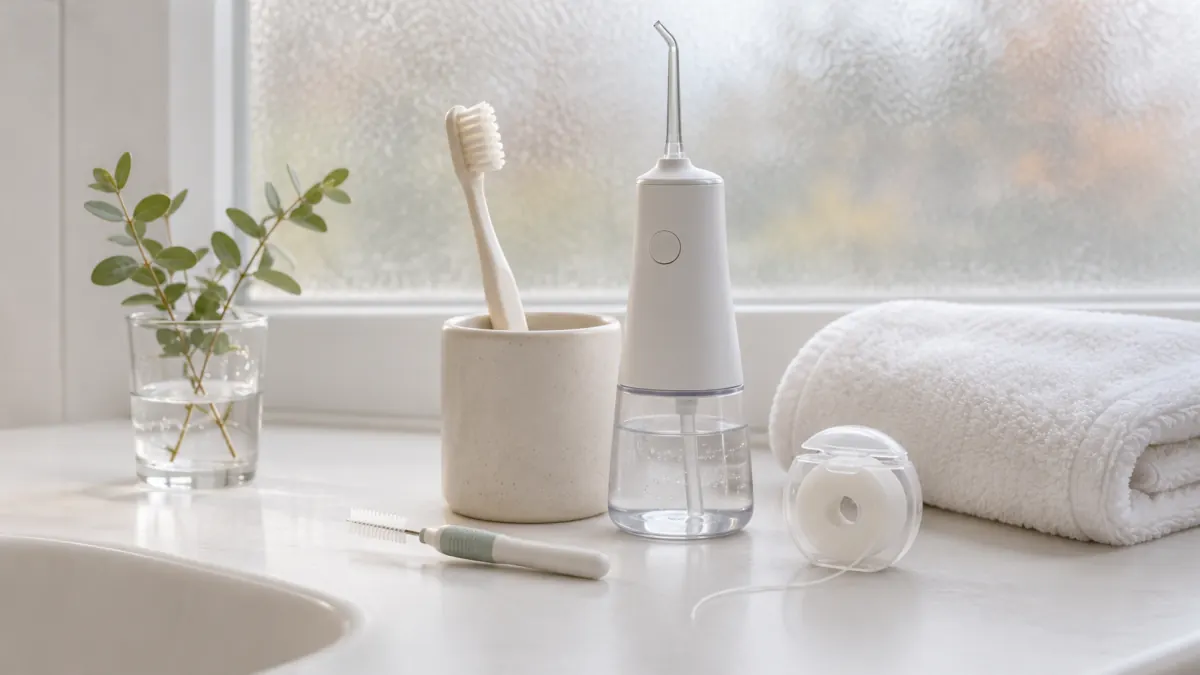
- Interdental brushes sized to fit the spaces next to your implant
- Implant-specific floss with a spongy section that wraps around the post
- A water flosser, which many people find especially helpful under bridges and full-arch teeth
Pay extra attention to full-arch restorations
If you have All-on-4 dental implants or another fixed bridge, the underside of the bridge, where it meets the gum, is the area most likely to be missed. A water flosser and a tufted end-tuft brush can reach places a regular brush cannot.
Do not ignore bleeding
It is tempting to avoid an area that bleeds. In fact, bleeding is usually a sign that the area needs more gentle cleaning, not less. If it does not settle within a week or two of improved care, book a visit.
Prevention in the chair: why maintenance visits matter
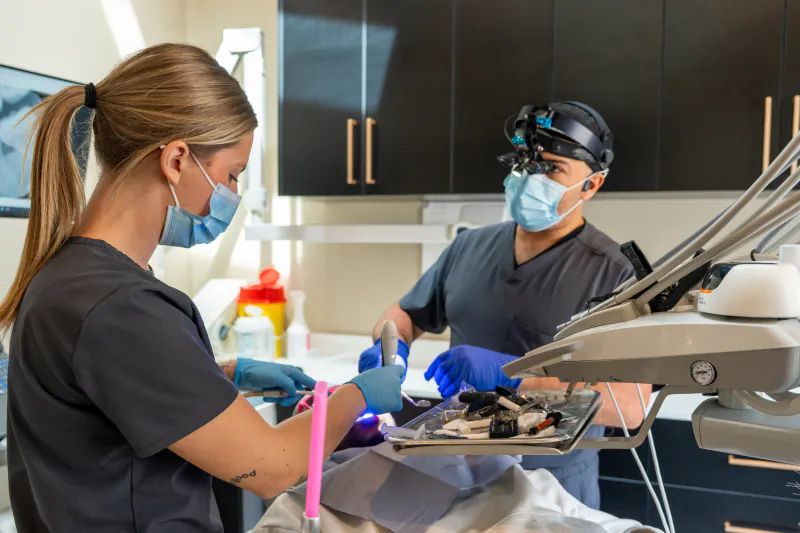
Even with excellent home care, some deposits harden into tartar that only a professional can remove. Regular maintenance appointments allow your hygienist to:
- Measure the gum pockets around each implant and compare them with previous readings
- Check for bleeding, swelling or discharge
- Clean the implant surfaces with instruments designed not to scratch them
- Check how your bite is landing on the implant crowns
- Take X-rays periodically to monitor bone levels around the implant
- Coach you on any areas you are missing at home
How often you need these visits depends on your mouth. Many implant patients do well with visits every three to six months. People with a history of gum disease or full-arch restorations may benefit from the shorter end of that range. We will suggest a schedule that fits you.
Lifestyle choices that help
- Quit or cut back on smoking. It is one of the most significant modifiable risk factors for implant problems.
- Keep diabetes well managed. Working with your physician on blood sugar control supports healing everywhere in the body, including your gums.
- Wear a night guard if you grind. If your dentist sees signs of clenching or grinding, a custom guard can protect both your implants and natural teeth.
- Stay on top of your general health. Some medications cause dry mouth, which makes plaque harder to control. Mention any changes to your dental team.
If inflammation is found, what happens next?
Treatment depends on the stage.
For mucositis, the plan usually involves a thorough professional cleaning, a review of your home care technique and, in some cases, an antimicrobial rinse. A follow-up check confirms the tissue has settled.
For peri-implantitis, treatment is more involved and may include deep cleaning of the implant surface, local medication, adjusting or removing the crown to improve access, or a surgical procedure to clean the area and reshape or regenerate bone. In some situations, regenerative procedures similar to bone grafting may be considered. Occasionally, if bone loss is severe, an implant may need to be removed and the site allowed to heal before replacement is discussed.
Every case is different. The earlier treatment starts, the more options there tend to be.
Starting off on the right foot
Prevention actually begins before an implant is placed. Treating existing gum disease, planning implant position carefully so the crown can be cleaned easily, and avoiding excess cement during crown placement all reduce risk down the line. If you are just beginning to explore dental implants, it is worth asking how the team plans for long-term maintenance, not only placement.
If your implants were placed elsewhere and you are not sure how they are doing, we are also happy to assess them. Patients from Cookstown, Bradford, Innisfil and the wider Highway 400 corridor visit us for implant check-ups.
Quick answers to common questions
Can peri-implantitis happen years after the implant was placed?
Yes. It can develop at any point, even many years after an implant has been functioning well. That is why ongoing maintenance matters for the life of the implant.
Is it painful?
Often not, especially in the early stages. That is why regular checks and attention to bleeding are so important.
Can I use an electric toothbrush on implants?
In most cases, yes. A soft brush head used gently is generally safe and effective. Ask your hygienist if you have a specific type of restoration.
Does peri-implantitis mean I will lose my implant?
Not necessarily. Many cases are stabilised with timely treatment. Outcomes depend on how much bone has been affected and how well the area can be kept clean afterwards.
How do I know if my implant is loose or just the crown?
You cannot always tell at home. Some movement comes from a loose abutment screw, which is a straightforward fix. Any movement should be checked promptly.
Keep your implant healthy for the long haul
An implant can serve you for many years, but it relies on healthy gums and bone, and those depend on daily care and regular check-ins. If you have noticed bleeding, tenderness or anything else that does not feel right, or if it has simply been a while since your implants were checked, book a maintenance visit with our Cookstown team and we will take a careful look.