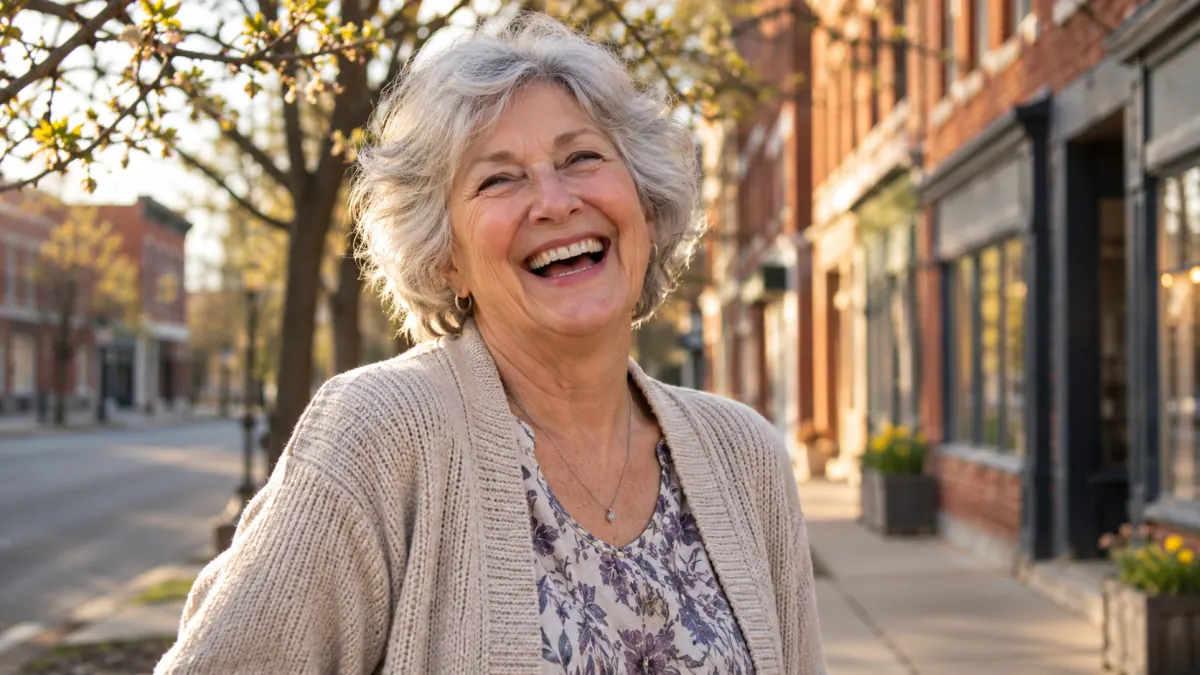
There is a particular kind of photo many older adults quietly avoid: the close-up at a grandchild’s birthday, the group shot at a retirement party, the candid one where everyone is laughing. Not because they are unhappy, but because somewhere along the way they started smiling with their lips closed.
Teeth change over a lifetime. That is simply what happens when they have been doing their job for sixty, seventy or eighty years. The good news is that age on its own is rarely a reason to rule out cosmetic or restorative dental work. In our Cookstown clinic, we see plenty of people in their sixties, seventies and beyond who decide this is the right time to do something for themselves. Many finally have the time, and some have the means they did not have when they were raising a family.
This guide covers what changes in a mature smile, which treatments tend to suit older adults, what to consider about health and budget, and how to approach a makeover that looks like a refreshed version of you rather than someone else.
How Smiles Change Over the Decades
Understanding why a smile looks different now can help you decide what you would like to change.
Wear. Years of chewing, and for some people grinding, gradually shorten and flatten the edges of the front teeth. Shorter teeth show less when you talk and smile, which can make the whole face look older.
Colour. Enamel thins with age, letting more of the naturally yellower layer underneath show through. Decades of coffee, tea and red wine add surface staining on top of that.
Old dental work. Fillings, crowns and bridges placed twenty or thirty years ago may have dark margins, mismatched shades or small cracks. Silver fillings in particular can make teeth look grey.
Gum changes. Gums can recede, exposing more of the root surfaces, which are darker and more prone to sensitivity and decay.
Missing teeth and shifting. When a tooth is lost and not replaced, neighbouring teeth can tip and drift. Gaps open up, and the bite can collapse slightly, which affects the shape of the lower face.
None of these are signs of neglect. They are the ordinary wear and tear of a long life.
What “Makeover” Can Mean Later in Life
A smile makeover is not one treatment. It is a plan that combines whatever is needed for a particular mouth. For older adults, that plan is usually as much about comfort and function as appearance. You can read about the broader approach on our smile makeovers page, but here is how the main options tend to fit a mature smile.
Professional whitening
Whitening can brighten natural teeth noticeably, though results vary and teeth with old crowns or fillings will not change colour. Older teeth sometimes respond more slowly, and people with sensitivity or receding gums need a gentle approach. Whitening is often done first if other restorations are planned, so new work can be matched to the brighter shade.
Bonding
Tooth-coloured composite can be added to rebuild chipped or worn edges, close small gaps or cover discoloured areas. It is conservative, often done in a single visit, and a good option for minor changes. It can stain and chip over time, so it may need touch-ups.
Veneers
Porcelain veneers are thin shells bonded to the front of teeth. They can change shape, length and colour together, which makes them well suited to restoring worn, short front teeth. Our published fees for a veneer start from $1,200 per tooth, with the final cost depending on what your exam and planning show. Veneers need a healthy foundation, so teeth with large fillings or significant gum issues may be better suited to crowns.
Crowns
A crown covers the whole tooth. For older adults with heavily filled, cracked or root-canal-treated teeth, crowns often make more sense than veneers because they add strength as well as improving appearance. Published crown fees at our clinic start from $1,466 per tooth, subject to your examination.
Replacing missing teeth
A smile makeover is often incomplete without addressing gaps. Dental implants replace individual teeth with roots anchored in the jawbone, helping support the face and bite. For people missing many or all teeth, implant-supported options such as implant dentures can give a far steadier fit than a traditional denture and make it easier to eat and speak with confidence.
A new or better denture
For some people, the most effective makeover is a well-designed denture. Modern dentures can be customized in tooth shape, size and shade, and the pink base can be shaded to look more natural. The right denture can restore lip support that has been lost over time.
Is There an Age Limit?
This is one of the first questions we hear. In general, there is no upper age limit for cosmetic or implant dentistry. What matters far more is overall health, how well any medical conditions are managed, the condition of your gums and bone, and whether you can comfortably attend appointments.
Conditions such as diabetes, heart disease or osteoporosis do not automatically rule anything out, but they do need to be considered carefully. Certain medications, including some blood thinners and bone-density treatments, may affect planning. Bringing a current medication list to your first visit helps the team plan safely. Our dental implants page explains how suitability is assessed in more detail.
Designing a Smile That Suits a Mature Face
One concern we hear often is: “I don’t want to look like I have fake teeth.” That is a fair worry, and it is entirely avoidable with good planning.
A natural-looking result for an older adult often means:
- A realistic shade. Bright, opaque white can look out of place on a mature face. A shade that is lighter than before but still natural usually looks better.
- Character in the shape. Natural teeth are not perfectly uniform. Subtle variation in shape and edges keeps a smile looking real.
- Appropriate length. Restoring lost length can take years off a smile, but going too long can look unnatural and affect speech.
- Harmony with the lips and face. The way teeth show when you speak and smile is as important as how they look up close.
Before anything permanent is done, many plans include a preview stage, such as photos and models, so you can see and discuss the proposed changes. You should feel comfortable saying “a little less” or “a little more” at that point.
Practical Considerations
Comfort and appointment length
Longer appointments can be tiring. It is perfectly reasonable to ask for treatment to be broken into shorter visits, to schedule at the time of day you feel best, or to take breaks. If you feel anxious, mention it; there are ways to help you feel more at ease, including nitrous oxide sedation with Dr. Daryna Kucherenko.
Dexterity and home care
New restorations need daily cleaning. If arthritis or other conditions make flossing difficult, let us know. Electric toothbrushes, water flossers and larger-handled tools can make a real difference, and the plan itself can be designed with easy cleaning in mind.
Dry mouth
Many medications reduce saliva, which raises the risk of decay around existing and new restorations. Managing dry mouth is part of protecting any smile work.
Budget and pacing
A full makeover does not have to happen all at once. Many people start with the most important function or comfort issue, then address cosmetic goals in stages. We offer payment plans that may help spread the cost, and treatment can be phased to suit your budget.
Where Most Plans Begin
Before anything cosmetic is planned, the foundation has to be healthy. For older adults, that usually means taking care of a few things first:
- Treating gum inflammation. Restorations last longer and look better when the gums around them are healthy and stable. A thorough cleaning with our hygienist is often the first step.
- Addressing decay and failing fillings. Root surface decay is more common later in life, and older fillings may be leaking underneath. These are repaired before any cosmetic work is placed on top.
- Stabilizing the bite. If missing back teeth have caused the bite to collapse, the front teeth often take extra load and wear faster. Restoring support at the back can protect any new work at the front.
- Then the visible changes. Once the mouth is healthy and stable, whitening, bonding, veneers or crowns can be planned with confidence.
This order can feel slower, but it protects your investment and helps the results look good for longer.
A Few Quick Answers
Will my insurance cover a smile makeover? Purely cosmetic treatment is often not covered, but parts of a plan that restore function, such as crowns on broken teeth, may be partially covered depending on your plan. We can help you understand what to ask.
How long do veneers and crowns last? With good care, many last ten to fifteen years or longer, though this varies with bite, habits and home care.
Can I combine a makeover with replacing missing teeth? Yes, and it is often the best approach, since gaps and tooth position affect the overall look. Your plan can include both.
Is it worth it at my age? That is a personal decision. Many older adults tell us they simply want to enjoy eating, talking and smiling without thinking about it. If that matters to you, it is worth exploring.
Starting the Conversation
A smile makeover later in life is less about chasing a perfect Hollywood look and more about feeling like yourself again: eating comfortably, laughing without covering your mouth, and not dreading the camera. Our team in Cookstown welcomes patients from Alliston, Bradford, Innisfil, Thornton and nearby towns, and we are happy to start with a simple conversation about what bothers you most.
When you are ready, call us at (705) 291-2222 or book a consultation. There is no obligation to commit to anything at the first visit, and we will take the time to explain every option clearly.