
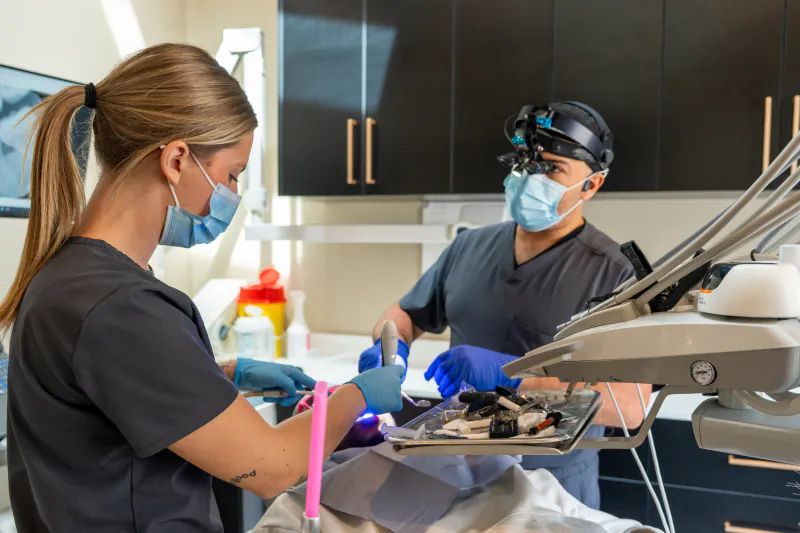

“Can I still get implants if I smoke?” We hear this question often, usually asked a little sheepishly, as though the person expects to be turned away. The honest answer is more useful than a simple yes or no: many smokers can have implants, but smoking raises the risk of problems both during healing and in the years afterwards. How much it raises that risk depends on how much you smoke, the rest of your health, and what you’re willing to change around the time of treatment.
This post is not a lecture. It’s an explanation of what tobacco does inside the mouth, why it matters specifically for implants, and the steps that genuinely help — whether you’re ready to quit entirely or just want to give your new teeth the best possible start.
Why implants care about smoking
A dental implant is a small titanium post placed in the jawbone. Over the following months, bone grows tightly against its surface in a process called osseointegration. Once that bond forms, the implant can support a crown, bridge or denture much like a natural root supports a tooth.
Everything about that process depends on good blood flow and a healthy immune response. That’s where smoking interferes.
Reduced blood supply
Nicotine narrows blood vessels. Less blood reaching the gums and bone means less oxygen and fewer nutrients delivered to the area that’s trying to heal. Healing slows, and the tissues are less able to fight off bacteria.
Carbon monoxide
Cigarette smoke contains carbon monoxide, which binds to red blood cells in place of oxygen. Even when blood does reach the surgical site, it carries less oxygen than it should.
Heat and chemicals
Smoke is hot and full of irritants. Drawing it across a fresh surgical site can irritate the wound and disturb the early blood clot.
Weaker defences against infection
Smoking affects how white blood cells work, which makes it harder for the body to control the bacteria that are always present in the mouth.
Gum disease
Smokers are considerably more likely to develop gum disease, and smoking can mask its early warning signs because the reduced blood flow means gums bleed less. Gum disease is a leading reason people lose teeth in the first place, and a similar process around implants — called peri-implantitis — is one of the main reasons implants fail long after they’ve healed.
What the research generally shows
Studies over many years have consistently found that smokers have higher rates of implant failure and more bone loss around implants than non-smokers. The effect tends to be greater for heavier smokers and for implants in the upper jaw, where bone is naturally softer. It’s also associated with more complications after bone grafting.
That doesn’t mean implants in smokers usually fail. Most still succeed. But the margin for error is smaller, and it’s important to go in with realistic expectations rather than assume the outcome will match that of a non-smoker.
Does vaping or cannabis count?
People often ask whether switching to an e-cigarette solves the problem. Vaping removes some of the combustion by-products, but most vapes still deliver nicotine, which constricts blood vessels. Research on vaping and implants is still limited, so we can’t promise it’s safe for healing — the cautious approach is to treat it much like smoking during the critical early weeks.
Smoked cannabis carries similar concerns about heat, irritation and suction on the surgical site. Nicotine gum, patches and lozenges avoid smoke and suction but still contain nicotine; they’re generally considered a better choice than smoking during healing, and some people find them helpful as a step toward quitting. Talk to your doctor or pharmacist about which aid suits you.
A realistic plan for smokers
Here’s how we usually approach implant treatment when a patient smokes. Your own plan will depend on your exam.
Before treatment
Be upfront about how much you smoke. We’re not going to judge you. Accurate information lets us plan properly — sometimes by suggesting a longer healing period, a different approach to grafting, or extra follow-up visits.
Get your gums healthy first. Any active gum disease needs treatment before implants are placed. That may involve a deep cleaning and a few weeks of improved home care.
Stop or cut back as early as you can. Ideally, people stop smoking at least a couple of weeks before surgery. Even a short break helps blood flow and oxygen levels recover somewhat. Stopping completely is best; reducing is better than nothing.
Line up support. If you’re going to try quitting, line up your nicotine replacement or prescription aid before surgery day, not after. Your family doctor or pharmacist can help you choose.
Surgery day and the first two weeks
This is the period that matters most. The surgical site is closing, the blood clot is protecting the area, and the earliest stages of bone healing are beginning.
- Avoid smoking and vaping completely for at least the first one to two weeks — longer if you can manage it. Many dentists recommend staying off cigarettes until the implant has fully integrated.
- Don’t suck through straws or do anything else that creates suction in your mouth.
- Follow your rinsing instructions exactly. Gentle salt-water rinses after the first day, or a prescribed rinse, help keep the area clean.
- Take any prescribed medications as directed, including the full course of antibiotics if they’re given.
- Eat soft, cool foods and chew on the other side.
The integration period
For a typical implant, the bone bonds to the implant over roughly three to six months. Smoking during this time continues to reduce blood supply to the bone. If you can stay smoke-free for the whole stretch, you give the implant its best chance.
After the final teeth are in
Once your crown or bridge is attached, smoking still affects the gums and bone around the implant. Over the long term it raises the risk of peri-implantitis. Regular hygiene visits, careful cleaning at home, and early attention to any bleeding or swelling around the implant all matter more for smokers.
Practical tips that make quitting easier around surgery
Quitting is hard, and it’s even harder when you’re also recovering from a dental procedure. A few ideas that patients often find useful:
- Use the surgery as your quit date. You already have a strong, concrete reason to stop, and you’ll be avoiding certain foods and activities anyway.
- Change the routine around your usual smoke breaks. If you always smoke with coffee on the porch, have your coffee somewhere else for a few weeks.
- Keep your hands busy. A stress ball, a short walk, or anything that replaces the habit of reaching for a cigarette.
- Tell people. Friends and family who know you’re trying are less likely to offer you one.
- Plan for cravings. They tend to peak in the first few days and ease over time. Having nicotine replacement on hand prevents a craving from becoming a relapse.
- Don’t give up after a slip. One cigarette doesn’t undo everything. Get back on track and let us know if you smoked close to your surgery so we can keep an eye on healing.
Which treatments are most affected?
Smoking affects all implant work, but some procedures are particularly sensitive.
| Procedure | Why smoking matters |
|---|---|
| Bone grafting | Grafted bone relies heavily on new blood vessels growing into it |
| Sinus lifts | Upper-jaw bone is softer and the graft needs time to mature |
| Single implants | Risk rises with heavier smoking, especially in the upper jaw |
| All-on-4 and full-arch work | Several implants must integrate together under early load |
This is one reason a thorough consultation matters. The dentist needs to know about smoking before deciding which approach is safest for you.
What if you’re not ready to quit?
Some people simply aren’t, and that’s a decision you get to make. If you continue to smoke, implants may still be possible, but you should expect a frank conversation about risk. Depending on your situation, the dentist might suggest waiting, staging treatment more slowly, or considering alternatives such as a bridge or a removable denture. If you’re unsure whether you’re a candidate, a consultation or free second opinion can clarify where you stand.
Questions smokers often ask
How long should I stop smoking before implant surgery?
Most dentists recommend stopping at least one to two weeks beforehand, and longer is better. Quitting for good gives the best long-term outlook for your implant and your remaining teeth.
When can I smoke again after an implant is placed?
The safest answer is not until the implant has fully healed, which commonly takes three to six months. If that isn’t possible, avoid smoking entirely for at least the first two weeks, and ask your dentist about your specific case.
Will smoking make my implant fall out?
Not necessarily, but it increases the chance that the implant won’t integrate or that the bone around it will break down later. Many smokers keep their implants for years, particularly with good home care and regular checkups.
Is chewing tobacco any better?
No. Smokeless tobacco sits against the gums and is linked to gum recession and other oral health problems. It carries its own risks for implants and the tissues around them.
Starting the conversation
If you smoke and you’ve been wondering whether implants are realistic for you, the best starting point is an honest conversation and a careful exam. At our Cookstown clinic, Dr. Khalid will look at your bone, gums and overall health and explain your options without pressure. People come to see us from across Simcoe County, from Bradford and Innisfil up to Alliston, and we’re glad to help you plan treatment around a quit attempt.
Request an appointment or call (705) 291-2222 to get started. We’ll help you weigh the risks and find the path that makes sense for you.