The question that comes up most in the days before implant surgery isn’t about the procedure itself. It’s “What am I going to eat?” People want to know whether they’ll be living on broth for a month, whether they can have their morning coffee, and what to stock the fridge with before the appointment.
Eating well after implant surgery is a practical problem with a practical answer. Your mouth needs to heal, which means avoiding pressure, heat and sharp edges on the surgical area. Your body also needs enough protein, calories and fluids to do that healing. A bit of planning covers both.
Below is a stage-by-stage guide we give patients at our Cookstown clinic, along with sample menus and a shopping list. It’s general guidance. Your own instructions may differ depending on how many implants were placed, whether you had a bone graft, and whether you received temporary teeth on the same day — so always follow the specific advice from your dental team first.
Why diet matters during healing
An implant needs to stay still while bone grows around it. Chewing hard or crunchy food over a new implant can create tiny movements that interfere with that bonding. Sharp food fragments, like chips or crusty bread, can poke at stitches. Very hot food and drink can increase swelling and bleeding in the first day or two.
At the same time, your body is repairing gum and bone, and that takes resources. Protein is especially important for tissue repair. People who eat poorly after surgery because chewing feels awkward often feel more tired and heal more slowly. The goal, then, isn’t just “soft” — it’s soft and nourishing.
Stage 1: The first 24 hours
Texture: liquids and very smooth foods, cool or lukewarm.
The anaesthetic may still be wearing off for a few hours. Wait until you have full feeling back in your lips and tongue before eating, so you don’t bite your cheek without noticing.
Good choices:
- Cool smoothies, eaten with a spoon (no straws)
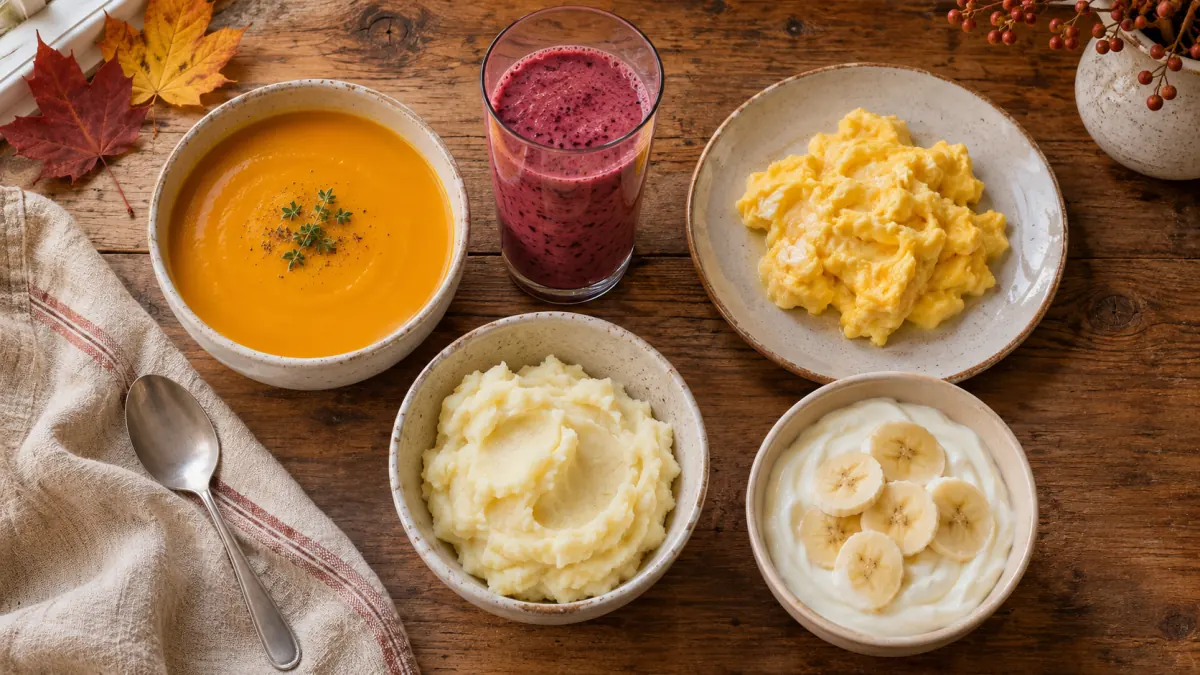
- Plain or vanilla yogurt
- Applesauce
- Pudding or custard
- Lukewarm, smooth soups such as blended squash or potato-leek
- Protein shakes or meal-replacement drinks
- Cottage cheese
Avoid hot drinks, alcohol, carbonated drinks, and anything with seeds or small bits. And skip the straw: the suction can disturb the blood clot that protects the surgical site.
Stage 2: Days 2 to 7
Texture: soft foods that need little or no chewing, still not hot.
Swelling usually peaks around day two or three and then starts to settle. Your appetite will likely come back, and you can broaden the menu considerably.
Good choices:
- Scrambled eggs or a soft omelette
- Mashed potatoes, mashed sweet potatoes or mashed cauliflower
- Oatmeal or cream of wheat, cooled to warm
- Well-cooked pasta, such as macaroni or small shells, with a smooth sauce
- Soft fish like salmon, cod or tilapia that flakes with a fork
- Hummus with soft pita torn into small pieces
- Refried beans or lentil soup
- Ripe banana, avocado, or canned peaches
- Silken tofu
- Smooth nut butters thinned into oatmeal or smoothies
Chew on the side away from the implant whenever possible. Small bites are easier than big ones.
Stage 3: Weeks 2 to 6
Texture: “fork-tender” foods — anything you could cut with the side of a fork.
By now most stitches have dissolved or been removed, and the gum is closing over the site. You can usually start moving toward more normal meals, while still steering clear of hard, crunchy or very chewy foods near the implant.
Good choices:
- Slow-cooked or braised meats, like pulled chicken, pot roast or stew
- Meatballs or meatloaf
- Soft rice dishes and risotto
- Steamed vegetables cooked until tender
- Pancakes, French toast or soft muffins
- Soft cheeses
- Shepherd’s pie or a cottage pie
- Chili without large chunks
This is also the stretch where fall comfort food works in your favour. A pot of slow-cooked stew or squash soup on a cold November evening is exactly the kind of meal that heals well.
Stage 4: Through the integration period
Texture: gradually returning to normal, with some caution.
Bone typically takes about three to six months to integrate with an implant, depending on the site and the bone quality. During that time, it’s sensible to keep very hard foods away from the implant area even if the gum looks fully healed. Your dentist will tell you when it’s safe to chew normally on that side, usually around the time your final crown or bridge is attached.
If you’ve had full-arch treatment with temporary teeth fixed in place on the day of surgery — for example, All-on-4 implants — the diet tends to be stricter for longer, because all the implants are supporting a bridge from day one. Many people are asked to stick with a soft diet for several weeks to a few months. Our article on recovering after All-on-4 covers that experience in more detail.
Sample menus
These are examples to help with planning, not rules. Adjust portions and choices to your appetite, any dietary restrictions, and your dentist’s instructions.
A day in the first week
| Meal | What to try |
|---|---|
| Breakfast | Warm (not hot) oatmeal with mashed banana and a spoonful of smooth peanut butter |
| Mid-morning | Greek yogurt with a little honey |
| Lunch | Blended butternut squash soup with a side of cottage cheese |
| Afternoon | Protein shake or a fruit smoothie eaten with a spoon |
| Dinner | Soft scrambled eggs, mashed potatoes and well-cooked carrots mashed with butter |
| Evening | Chocolate pudding or a small bowl of applesauce |
A day in weeks two to four
| Meal | What to try |
|---|---|
| Breakfast | Soft pancakes with maple syrup and a side of scrambled eggs |
| Lunch | Tuna or egg salad on very soft bread, crusts removed |
| Afternoon | Hummus with soft pita or a ripe pear, peeled and sliced thinly |
| Dinner | Baked salmon, rice, and steamed zucchini |
| Evening | Rice pudding or a custard |
A grocery list for the week of surgery
Shopping before your appointment means you won’t be scrambling afterward. Most of this is available at any grocery store in Cookstown, Alliston or Barrie.
Dairy and protein
- Plain and Greek yogurt
- Cottage cheese
- Eggs
- Soft cheese
- Silken tofu
- Protein powder or ready-to-drink shakes
Pantry
- Oatmeal or cream of wheat
- Small pasta shapes
- Canned or boxed smooth soups
- Canned salmon or tuna
- Smooth peanut or almond butter
- Instant mashed potatoes (handy when you don’t feel like cooking)
- Pudding cups or custard
Produce
- Ripe bananas
- Avocados
- Potatoes and sweet potatoes
- Squash
- Frozen berries for smoothies
- Applesauce
Freezer
- Pre-made soups or stews you can reheat
- Frozen fish fillets
A tip that patients appreciate: cook and freeze a few portions of soup or stew the weekend before your surgery. You’ll be glad to have them on day three.
Foods to leave off the menu for now
Until your dentist gives you the go-ahead, it’s best to avoid:
- Crunchy foods — chips, crackers, popcorn, nuts, raw carrots
- Hard foods — hard candy, ice, crusty bread, bagels, pizza crust
- Sticky or chewy foods — caramel, toffee, gummy candy, chewy steak, jerky
- Small seeds and grains — sesame seeds, poppy seeds, quinoa, berries with tiny seeds can lodge in the surgical site
- Spicy or acidic foods in the first few days, which can sting a healing wound
- Very hot food and drink in the first 24 to 48 hours
- Alcohol, especially while you’re taking pain medication or antibiotics
Popcorn deserves a special mention. The thin hulls get wedged under the gum surprisingly easily, and they’re hard to get out. It’s one of the last foods worth reintroducing.
Getting enough protein and fluids
When chewing is limited, protein is the nutrient people most often fall short on. A few easy ways to keep it up:
- Add unflavoured protein powder to soups, oatmeal or mashed potatoes
- Choose Greek yogurt over regular yogurt
- Blend silken tofu or cottage cheese into smoothies
- Include eggs or soft fish at least once a day
Drink plenty of water. Dehydration can make you feel worse and slow healing. If you’re taking pain medication, staying hydrated may also help with the constipation some medications cause.
Keeping the area clean while you eat
Food choices go hand in hand with cleaning. After the first day, gentle rinsing with warm salt water after meals helps keep food particles away from the surgical site. Your dentist may prescribe a medicated rinse instead. Brush your other teeth normally, and be gentle near the implant until you’re told otherwise. Don’t poke at the area with your tongue or fingers.
Common questions
When can I drink coffee again?
Many people can have lukewarm coffee after the first day. Avoid very hot drinks for the first 24 to 48 hours, and skip the straw. If you take it black and it tends to be scalding, let it cool a bit longer than usual.
Is it normal to lose a bit of weight after surgery?
A small dip is common, especially in the first week when eating feels awkward. Focusing on calorie- and protein-dense soft foods like smoothies with nut butter, eggs and Greek yogurt helps. If you’re struggling to eat enough, let us know.
Can I eat on the implant side if it doesn’t hurt?
Feeling fine isn’t the same as being healed. Bone integration happens quietly below the surface. Keep chewing on the other side until your dentist confirms it’s safe.
What if I’ve had several implants on both sides?
Then the whole mouth needs gentler treatment for longer, and a liquid and very soft diet may last a little beyond the first week. Your instructions will reflect the extent of your treatment, whether that’s multiple implants or a full arch.
We’re here between appointments
Recovery is easier when you know what to expect, and food is a big part of that. If anything about your healing worries you — swelling that keeps increasing, bleeding that won’t settle, or trouble eating enough — call our Cookstown office at (705) 291-2222 rather than waiting for your next visit.
If you’re still at the planning stage, you can read more about how treatment works or book a consultation to talk through your options with Dr. Khalid and the team.