
Summer photos have a way of making people notice their teeth. Wedding season, graduations, the cottage, family reunions: suddenly there are cameras everywhere, and a smile you were mostly fine with in February starts to bother you in June.
When patients in Cookstown come to us wanting a brighter smile, the conversation almost always lands on the same fork in the road. Should they whiten their natural teeth, or is it time to think about veneers?
Both can make a real difference. They are also very different treatments, aimed at different problems, with different costs and commitments. Here is how we help people decide.
First, Name the Problem
The single most useful thing you can do before choosing is to be specific about what you dislike. “I want a nicer smile” covers a lot of ground. Try looking in a mirror in good daylight and asking yourself which of these fits best:
- My teeth are the right shape, but they’ve gone yellow or dull over the years.
- I have a few chips, small gaps, or teeth that look uneven in length.
- I have grey or dark staining that never seems to change no matter what I do.
- I have old fillings or bonding on my front teeth that don’t match anymore.
- Some of my teeth are worn down and look short.
If the first statement is the only one that applies, whitening is usually where we start. If any of the others ring true, whitening alone may not get you the result you are picturing, and veneers or a combined plan become worth discussing.
How Professional Whitening Works
Whitening uses a peroxide-based gel to break down stain molecules within the enamel and the layer beneath it. Nothing is removed from the tooth, and nothing is added on top. The tooth simply becomes lighter in colour.
What it does well
- Lifts yellow and brown staining from coffee, tea, red wine and age
- Brightens an entire smile evenly when the teeth are healthy
- Requires no drilling or reshaping
- Costs considerably less than veneers
- Can be repeated or topped up over time
Where it falls short
- It does not change the shape, size or alignment of a tooth
- It does not lighten crowns, fillings, bonding or veneers, so existing dental work can end up looking darker than the natural teeth around it
- Deep grey staining, such as from certain medications taken during childhood, or a tooth darkened after trauma, often responds poorly
- Results fade gradually, especially with heavy coffee, tea or tobacco use
- Some people experience temporary sensitivity during and shortly after treatment
Professional whitening is generally safer and more predictable than strong over-the-counter products because a dental team first checks for cavities, gum recession or cracked teeth that could make whitening uncomfortable. It is also the only way to know in advance whether your particular staining is likely to respond.
How Porcelain Veneers Work
A veneer is a thin shell of porcelain, custom made to fit the front surface of a tooth. To make room for it, a small amount of enamel is usually reshaped from the front of the tooth. The veneer is then bonded firmly in place.
Because the veneer is designed from scratch, the shape, length, width and colour can all be planned. That is what makes veneers so versatile within a broader smile makeover.
What veneers do well
- Cover stains that whitening can’t reach
- Close small gaps and even out uneven edges
- Rebuild chipped or worn teeth
- Create a consistent colour across several teeth
- Resist new staining better than natural enamel
What to weigh carefully
- Reshaping enamel is not reversible; once a tooth has a veneer, it will typically always need one
- Veneers can chip or debond, and eventually need replacement
- The cost is significantly higher, and is charged per tooth
- Not everyone is a candidate; heavy grinding, active gum disease or significant decay need attention first
Our published fees list a porcelain veneer starting from $1,200 per tooth. As with any cosmetic plan, the exact cost depends on an exam, how many teeth are involved and what preparation is needed. You can see current fees on our pricing page.
Side-by-Side Comparison
| Professional whitening | Porcelain veneers | |
|---|---|---|
| Changes colour | Yes, natural teeth only | Yes, any tooth it covers |
| Changes shape or size | No | Yes |
| Tooth reshaping | None | Usually a small amount of enamel |
| Reversible | Yes, colour gradually returns | No |
| Typical visits | One to a few | Usually two or more |
| How long results last | Months to a few years, with touch-ups | Many years with good care |
| Cost | Lower | Higher, per tooth |
| Works on crowns or fillings | No | Replaces their visible surface |
The Order Matters When You Combine Them
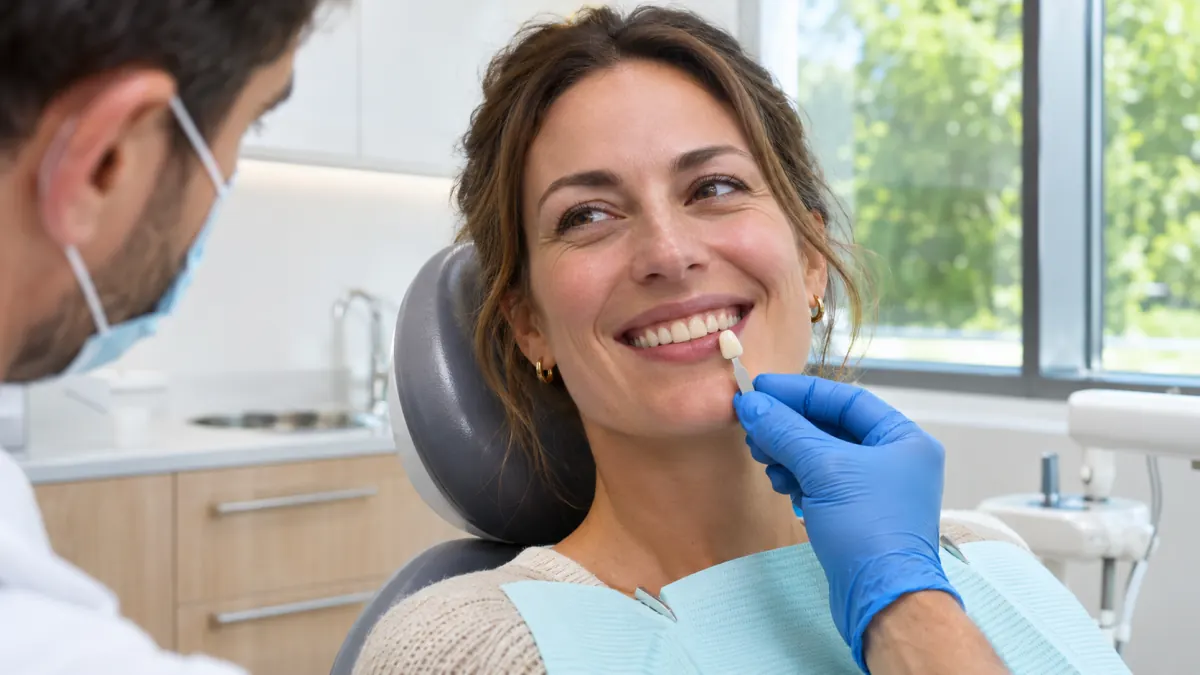
Some of the nicest results come from using both. A common plan is to whiten the whole smile first, let the colour settle, and then place one or a few veneers to correct specific teeth.
The order matters because veneers are colour-matched to the teeth around them, and porcelain will not whiten afterward. If you place veneers first and whiten later, the veneers will stay exactly as they are while the natural teeth lighten around them. Whitening first means the veneers can be made to match your new, brighter shade.
We typically recommend waiting a short period after whitening before matching veneer shades, since colour can shift slightly in the days after treatment.
Questions We Ask During a Cosmetic Consultation
When you come in to talk about your smile, Dr. Kucherenko or Dr. Khalid will usually want to understand more than just the colour. Expect questions like:
- What bothers you most when you see your smile in photos?
- Have you whitened before, and how did your teeth respond?
- Do you clench or grind, especially at night?
- Do you have crowns or fillings on the teeth that show when you smile?
- How much maintenance are you comfortable with?
- Is there an event or date you are working toward?
That last question is more important than it sounds. Whitening can usually be done within a few weeks of deciding. Veneers involve planning, preparation, temporaries and lab time, so they need a longer runway. If you have a September wedding or a family trip planned, mention it at the start.
Who Tends to Choose Whitening
In our experience, whitening suits people who:
- Have healthy, reasonably straight teeth with no major chips
- Are bothered mainly by general yellowing
- Have little or no visible dental work on their front teeth
- Want the most conservative option, at least as a first step
- Are prepared to do occasional touch-ups
For many people in this group, a professional whitening is all they need, and it can be a nice confidence boost without any lasting change to the tooth.
Who Tends to Choose Veneers
Veneers are worth considering for people who:
- Have stains that have not responded to whitening
- Want to change the shape or proportions of their front teeth
- Have chips, small gaps or uneven edges
- Have mismatched older bonding they would like to replace
- Want a longer-lasting cosmetic change and accept the upkeep
Veneers are not a quick fix, but for the right person they offer something whitening simply cannot: control over the whole look of a tooth.
A Word on Bonding
There is a middle path worth knowing about. Composite bonding uses tooth-coloured resin applied directly to the tooth to fix small chips or gaps. It usually requires little or no reshaping and costs less than porcelain. It does stain more readily and wears faster than porcelain, so it is often a good choice for a single small repair rather than a full smile change. It can also be combined with whitening.
Caring for Your Result
Whichever route you take, the habits that protect your smile are similar:
- Brush twice a day with a non-abrasive toothpaste and floss daily
- Rinse with water after coffee, tea or red wine
- Avoid using your front teeth to open packages or bite very hard objects
- Wear a night guard if you grind
- Keep up with regular cleanings, where our hygienist Anna Porth can polish away new surface staining
Veneers are not immune to decay at their edges, so the tooth underneath still needs the same care as any other.
FAQ
Will whitening damage my enamel?
Professionally supervised whitening is considered safe for healthy teeth. Temporary sensitivity is the most common side effect and usually settles within a few days.
Can I whiten my veneers later?
No. Porcelain does not respond to whitening gel. If your veneers have picked up surface staining, a professional polish can help, but the underlying colour stays the same.
How long do porcelain veneers last?
With good care, many veneers last a long time, often well over a decade. Grinding, biting hard objects and gum changes can shorten that.
Is one veneer enough?
Sometimes. A single veneer can correct one chipped or discoloured tooth, although matching one tooth perfectly to its neighbours takes careful shade work.
Talk It Through Before You Decide
You don’t need to decide between whitening and veneers on your own. A cosmetic consultation at our clinic on Queen Street in Cookstown is a relaxed conversation where we look closely at your teeth, talk about what you want to change, and lay out the realistic options, starting with the most conservative.
If summer photos have you thinking about your smile, call us at (705) 291-2222 or book your cosmetic consultation. You can also browse our smile makeovers page for more background.