
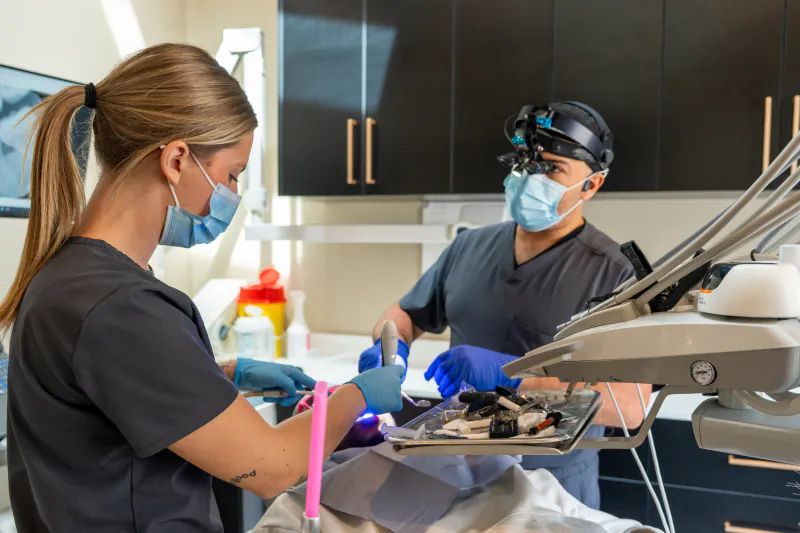

You wake up with a dull ache near your ears. Your partner mentions a strange grinding noise in the night. A front tooth that used to have a slightly scalloped edge now looks perfectly flat, and a small chip appeared out of nowhere last month.
Tooth wear from grinding, known as bruxism, is one of those problems that creeps up quietly. Enamel is the hardest substance in the body, but it isn’t designed for hours of forceful side-to-side contact every night. Over years, the result can be shorter, flatter, more sensitive teeth, and a smile that looks older than you feel.
The encouraging part is that worn teeth can be protected and, when needed, rebuilt. This article covers how to recognize grinding damage, why it matters, and the range of options our Cookstown team uses to restore a worn bite.
Is It Grinding? Common Signs
Many people who grind don’t know they do it, especially if it happens during sleep. Clues include:
- Flat, smooth or shiny spots on the biting surfaces of teeth
- Front teeth that look shorter or more even in length than they used to
- Small chips or cracks along the edges
- Sensitivity to cold, as worn enamel exposes the softer layer beneath
- Jaw muscle soreness or tightness, particularly in the morning
- Headaches around the temples on waking
- Clicking or discomfort in the jaw joint
- Notches near the gumline
- Fillings or crowns that keep breaking
Daytime clenching is common too, often during concentration, driving or stress. If you catch yourself with your teeth pressed together while reading this, you’re in good company.
Why Teeth Wear Down
Grinding is rarely the only factor. Tooth wear usually comes from a combination of:
Attrition. Tooth-on-tooth contact from grinding and clenching. This tends to create flat, matching wear facets on upper and lower teeth.
Erosion. Acid softening the enamel, from sources such as sparkling water, soft drinks, citrus, sports drinks, wine, or acid reflux. Softened enamel wears much faster when it is then ground against.
Abrasion. Mechanical wear from something other than teeth, such as aggressive brushing with a hard brush or habits like chewing pens.
Understanding the mix matters, because the protection plan is different for each. Someone whose wear is mostly erosion may need dietary changes and a conversation with their physician about reflux, not just a night guard.
Stress, sleep issues, certain medications, caffeine and alcohol can all play a role in grinding. In some people, bruxism is associated with sleep-disordered breathing, which is worth mentioning to your family doctor if you also snore heavily or wake unrefreshed.
What Happens If It Isn’t Addressed
Wear is generally slow, but it is also cumulative. Enamel doesn’t grow back. Over time, people with ongoing grinding may experience:
- Increasing sensitivity as more dentin is exposed
- Chips and fractures, including cracks that extend toward the root
- A collapsing bite, where the teeth have worn so much that the lower face looks shorter
- Breakage of fillings, crowns and other dental work
- Jaw muscle pain and joint discomfort
In severe cases, teeth can wear down to the point where there isn’t much left to restore. Catching it earlier keeps more options open.
Step One: Protect What You Have
Before any rebuilding, the priority is stopping further damage. Restorations placed on teeth that are still being ground at full force are much more likely to chip or fail.
A custom night guard
A night guard (also called an occlusal guard or splint) is a hard acrylic appliance made to fit your teeth precisely. It doesn’t usually stop grinding, but it moves the wear onto the guard instead of your enamel and can ease muscle strain.
Custom guards fit far better than boil-and-bite versions from the pharmacy, which can be bulky and sometimes make clenching worse. A custom guard is made from impressions or a scan, adjusted in the chair so your bite meets it evenly, and checked periodically.
Reducing the triggers
Alongside a guard, small changes can help:
- Notice daytime clenching and practise “lips together, teeth apart”
- Cut back on caffeine later in the day and alcohol in the evening
- Use a soft toothbrush and gentle technique
- Limit acidic drinks, and drink water afterward rather than brushing immediately
- Talk to your physician about reflux, sleep quality or medication side effects if relevant
Step Two: Assess the Damage and Plan
Once grinding is under control, we look carefully at how much tooth structure has been lost and where. Dr. Kucherenko, whose focus includes restorative work such as crowns and bridges, or Dr. Khalid will usually:
- Examine each tooth for wear, cracks and sensitivity
- Take photos and X-rays
- Make models or a scan of your teeth to study the bite
- Assess the jaw joints and muscles
- Measure whether the bite has lost height
That last point matters. When many teeth have worn down together, rebuilding them sometimes involves carefully restoring some of the height the bite has lost. That kind of plan is usually trialled with temporary materials first, so you can adjust before anything permanent is made.
Step Three: Rebuild, From Simple to Complex
Treatment depends entirely on how much wear there is and how many teeth are involved. Here’s the general range, from most conservative to most involved.
Composite bonding
For mild wear, small chips or early flattening of front teeth, tooth-coloured composite resin can be added directly to the tooth to rebuild edges and cover exposed dentin. It requires little or no drilling and can often be done in a single visit. Composite wears faster than porcelain, so a night guard is especially important afterward.
Onlays
When a back tooth has lost much of its chewing surface but still has strong walls, an onlay can rebuild the top while preserving more natural tooth than a full crown would.
Porcelain veneers
For front teeth that have become short or chipped, veneers can restore length and shape while improving the overall look of the smile. Because grinding puts veneers under extra stress, they are only recommended once grinding is managed, and a night guard is typically part of the plan. Our smile makeover page shows how veneers fit into broader cosmetic treatment. Published fees list veneers starting from $1,200 per tooth, with the exact cost depending on your exam.
Crowns
When a tooth is heavily worn, cracked or already heavily filled, a crown covers and protects the whole tooth. Crowns can be made in strong ceramic materials suited to people with heavy bites. Our published fees list crowns starting from $1,466 per tooth; your exam determines what’s actually needed. You can review current fees on our pricing page.
Full-mouth rehabilitation
When most of the teeth have worn significantly and the bite has collapsed, restoring them one at a time doesn’t work well. Instead, the whole bite is planned together, often in phases, using a combination of crowns, onlays and veneers. This is a bigger commitment of time and cost, but it can transform both function and appearance.
When a tooth can’t be saved
Occasionally, grinding fractures a tooth beyond repair, often with a crack running down into the root. In that situation, replacing it with a single dental implant or a bridge may be the best option. Implants in people who grind need careful planning, including a protective night guard afterward. Our dental implants page explains the treatment in more detail.
Comparing the Options at a Glance
| Option | Best suited to | Tooth preparation | Visits |
|---|---|---|---|
| Night guard | Anyone who grinds | None | Two, typically |
| Composite bonding | Mild wear, small chips | Minimal | Often one |
| Onlay | Worn back tooth with strong walls | Moderate | Usually two |
| Veneer | Short or chipped front teeth | Small amount of enamel | Two or more |
| Crown | Heavily worn or cracked teeth | More extensive | Usually two |
| Full-mouth rehabilitation | Widespread wear and bite collapse | Varies | Several, in phases |
Living With Restored Teeth
Rebuilt teeth can last a long time when they’re protected. The habits that matter most:
- Wear your night guard every night, and bring it to your checkups so it can be inspected
- Keep regular hygiene visits; our hygienist Anna Porth can spot new wear facets and chips early
- Avoid chewing ice, hard candy, or using teeth as tools
- Watch acidic drinks
- Report jaw pain, new sensitivity or a change in how your teeth meet
Your Questions Answered
Can worn enamel grow back?
No. Enamel doesn’t regenerate. Lost structure can only be replaced with restorative materials, which is why protecting what remains matters so much.
Will a night guard stop me from grinding?
Usually not entirely, but it protects your teeth from the forces and can reduce muscle soreness for many people.
Do I need to fix every worn tooth at once?
Not necessarily. Mild wear may only need monitoring and a guard. Restorations are planned according to need, and larger cases are often done in stages.
Is treatment for grinding covered by insurance?
Coverage varies by plan. Some policies cover night guards and some restorative work; others don’t. We can help you submit a predetermination before you start.
Take the First Step Before More Enamel Is Lost
If your teeth look shorter than they used to, or you’ve been waking up with a sore jaw, it’s a good time to get them checked. At My New Teeth in Cookstown, we’ll find out what’s causing the wear, protect your teeth from further damage, and plan any repairs at a pace that suits you.
We see patients from Cookstown, Bradford, Thornton and the surrounding area at our Queen Street clinic. Call (705) 291-2222 or reserve an appointment online, and if you’ve already been given a plan elsewhere, our free second opinion is always available.