
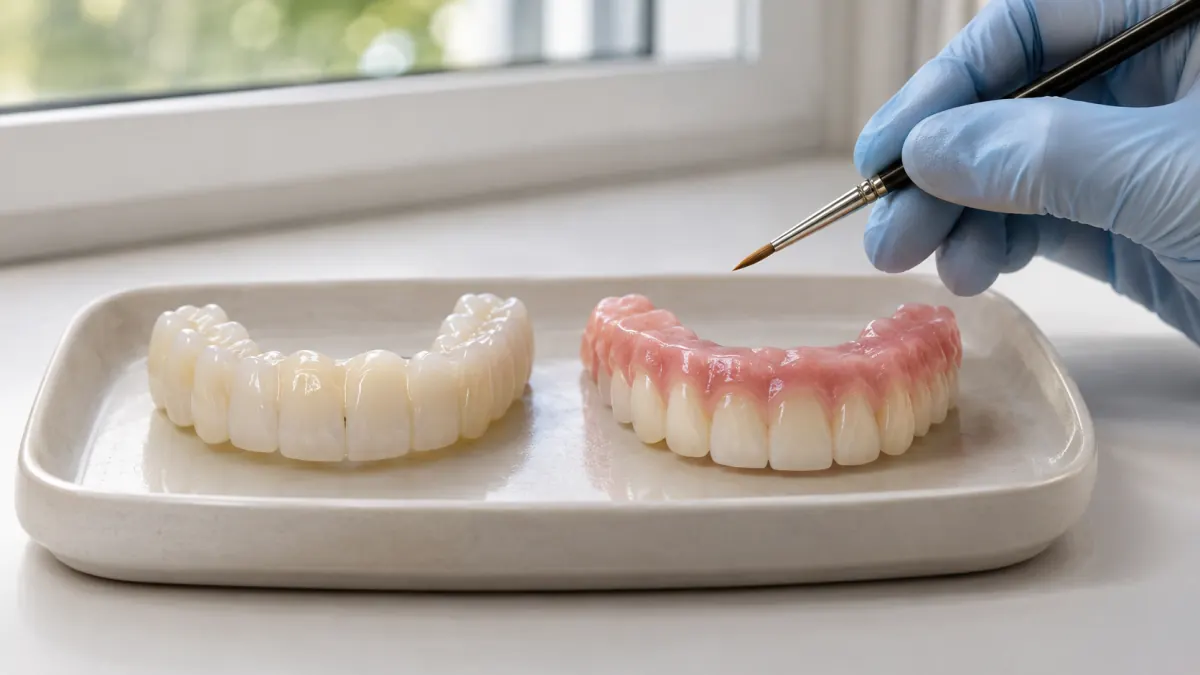
The short version: zirconia final bridges are harder, more stain-resistant and generally longer-lasting, but they cost more and are harder to repair if they chip. Acrylic bridges (usually built over a metal framework) are lighter on the wallet, gentler on the opposing teeth and simple to fix, but they wear and stain faster and typically need refurbishing or replacing sooner. Neither is the “right” answer for everyone.
That summary is where most conversations at our Cookstown clinic start, not where they end. If you are partway through All-on-4 treatment, you are probably wearing a provisional bridge right now while your implants settle in. Sometime in the next few months, you will be asked to choose the material for your permanent teeth. This article is meant to help you walk into that appointment already knowing the trade-offs.
Why there are two bridges in the first place
With most full-arch implant plans, the teeth you receive on surgery day are a provisional (temporary) bridge. It is usually made of acrylic, without a metal framework, because it has to be produced quickly and may need adjustment as your gums heal and your bite settles. It is designed to get you through the healing period, not to last for decades.
Once the implants have bonded with the bone, typically after three to six months, the final bridge is made. This one is built to last, and it is where the material decision comes in. By this stage you have lived with the provisional for months, so you have a much clearer sense of what you like about the shape, the length of the teeth and how your lips sit. All of that feedback goes into the final design.
Acrylic hybrid bridges, explained
What they are
An acrylic final bridge — often called a hybrid — has a rigid metal framework (commonly titanium) milled to fit the implants precisely. Pink acrylic is built over the framework to recreate the gums, and individual denture teeth, typically made of high-quality acrylic or composite, are set into it.
Strengths
- Lower cost than a full zirconia bridge, often significantly.
- Kinder to opposing teeth. Acrylic is softer than natural enamel and much softer than zirconia, so it causes less wear on any natural teeth it bites against.
- Shock absorption. The slight give in acrylic can cushion biting forces, which some clinicians prefer in certain bites.
- Easy repairs. A chipped or broken tooth can often be replaced or rebuilt in a lab, sometimes quickly, without remaking the whole bridge.
- Adjustable. If the gums change shape over the years, acrylic can be added or reshaped.
Weaknesses
- Wear. Acrylic teeth gradually flatten with chewing. Over years, this can change the bite and the look of the smile.
- Staining and odour. Acrylic is more porous than ceramic. Coffee, tea, red wine and tobacco stain it more readily, and it can hold onto plaque if cleaning is not thorough.
- Shorter service life. Many acrylic hybrids need significant refurbishment — new teeth set on the existing framework — or replacement somewhere in the range of five to ten years, depending on bite force and habits.
Zirconia bridges, explained
What they are
Zirconia is a very strong, tooth-coloured ceramic. A full-arch zirconia bridge is designed digitally and milled from a solid block, then shaded and glazed. The gum portion is tinted pink with ceramic stains. Some designs layer porcelain over the front surfaces for extra translucency, while “monolithic” designs are a single solid piece, which reduces the risk of chipping.
Strengths
- Very strong and wear-resistant. Zirconia barely wears under normal chewing, so the bite and the shape of the teeth stay stable over many years.
- Excellent stain resistance. The glazed surface is smooth and non-porous, so it stays bright and is less prone to collecting plaque.
- Natural appearance. Well-made zirconia has a lifelike, slightly translucent look, especially with skilled staining.
- Long service life. With good maintenance, zirconia bridges are generally expected to last considerably longer than acrylic hybrids.
Weaknesses
- Higher cost. Materials, design time and milling all add to the price.
- Hard on opposing natural teeth if the glaze wears away or the surface is not well polished. When zirconia bites against your own natural teeth, the bite has to be planned carefully.
- Fracture is harder to repair. Zirconia rarely breaks, but if a section chips or fractures, repair options are limited and remaking part or all of the bridge may be needed.
- Less forgiving of design errors. Because it is so rigid, a zirconia bridge relies on an accurate fit and a well-planned bite. This is one reason it is usually made after the provisional phase, once everything has settled.
Side by side
| Factor | Acrylic hybrid (on metal framework) | Zirconia |
|---|---|---|
| Upfront cost | Lower | Higher |
| Wear over time | Gradual flattening of teeth | Minimal |
| Stain resistance | Moderate | Excellent |
| Effect on opposing natural teeth | Gentle | Can cause wear if not polished and planned well |
| Repair of a chip | Usually straightforward | More difficult, may need remake |
| Typical service life | Often 5–10 years before major refurbishing | Commonly longer, with good care |
| Weight and feel | Slightly lighter feel for some people | Very smooth, solid feel |
All figures are general ranges. How long any bridge lasts depends on your bite, habits and maintenance.
Six questions to bring to your appointment
What is my opposing arch? If your other jaw has natural teeth, a denture, or another implant bridge, that changes which material makes sense. Two zirconia arches against each other behave differently from zirconia against acrylic.
Do I grind or clench? Heavy grinders can wear acrylic quickly. They can also stress zirconia. Either way, a night guard is often recommended after a full-arch bridge.
How important is long-term appearance to me? If you want your smile to look the same in eight years as it does on day one, zirconia’s stain and wear resistance count for a lot.
How do I feel about repairs? Some people are comfortable with occasional lab visits to touch up acrylic. Others would rather pay more upfront to reduce the chance of repairs.
What does the budget allow right now? It is reasonable to choose acrylic now, knowing a future replacement could be in zirconia. Your implants remain the same; only the bridge on top changes.
How is my oral hygiene routine? Both materials need careful cleaning underneath. Zirconia is easier to keep clean, but neither forgives neglect.
What about cost?
Full-arch fees vary widely depending on the number of implants, whether bone grafting is needed, and the material of the final teeth. That is exactly why we do not quote a single “All-on-4 price” without an exam. Our pricing page lists our published starting fees, and we will give you a written plan with both material options priced so you can compare them clearly.
If the difference between the two options is the deciding factor, our payment plans can make it easier to spread the cost over time. And if you have already been quoted for full-arch treatment elsewhere and want to understand the materials being proposed, a free second opinion is a simple way to get clarity.
Caring for whichever bridge you choose
The day-to-day routine is similar for both materials:
- Brush twice daily with a soft brush and a non-abrasive toothpaste. Gritty pastes can dull acrylic and scratch zirconia’s glaze.
- Clean under the bridge every day with a water flosser, superfloss or the interdental brushes your hygienist recommends.
- Avoid using your teeth as tools and be careful with very hard foods such as ice, hard candy and bones.
- Wear a night guard if one is prescribed.
- Keep your professional maintenance visits, where the bridge may be removed periodically for a thorough clean and the implants checked.
The implants underneath are only as healthy as the gum tissue around them. Whichever material sits on top, daily cleaning is what protects the foundation.
Frequently asked questions
Can I switch from acrylic to zirconia later?
Usually, yes. The implants stay in place, and a new bridge can be designed for them. Many people start with acrylic and move to zirconia when the first bridge needs replacing.
Does zirconia feel different in the mouth?
Some people notice it feels very smooth and solid. Others cannot tell the difference after a few days. Your tongue adapts quickly to either.
Is zirconia more likely to break?
Zirconia is very strong, and fractures are uncommon when the bridge is well designed and the bite is balanced. The main concern is that if it does chip, it is harder to repair than acrylic.
Will my final bridge look like my provisional?
It should look like an improved version. The provisional acts as a test drive; tooth length, shape, shade and lip support can all be refined in the final bridge based on your feedback.
Making the decision with your Cookstown team
There is no wrong choice here, only a choice that fits you better or worse. Dr. Khalid and the team will look at your bite, your opposing teeth, your habits and your goals, then show you how each material would play out for you specifically. Whether you live in Cookstown or are driving in from Alliston or Bradford, it can help to bring a family member to this appointment, since it is a long-term decision and a second set of ears is useful.
When you are ready to talk it over, book a visit or call us at (705) 291-2222. We will make sure you leave knowing exactly what you are choosing and why.